Author: admin

  • Moving the Microchip: The Rise of “Zero-Shock” Logistics in India’s Silicon Valley

    Moving the Microchip: The Rise of “Zero-Shock” Logistics in India’s Silicon Valley

    The headlines are celebrating the “First Chip” expected from Dholera later this year. But in the logistics world, the revolution has already begun. Before a single wafer is etched, the multi-million dollar lithography machines required to make them must arrive safely.

    This week’s surge in demand for Air-Cushion fleets signals that India’s supply chain is graduating from “Bulk” to “Bespoke.”

    The Challenge: Cargo That Can’t “Feel” the Road

    Transporting semiconductor equipment isn’t like moving steel or textiles. These machines are sensitive to:

    • Vibrations: Even a minor pothole shock can misalign nano-precision lenses.
    • Tilt: A tilt beyond 15 degrees can void warranties worth millions.
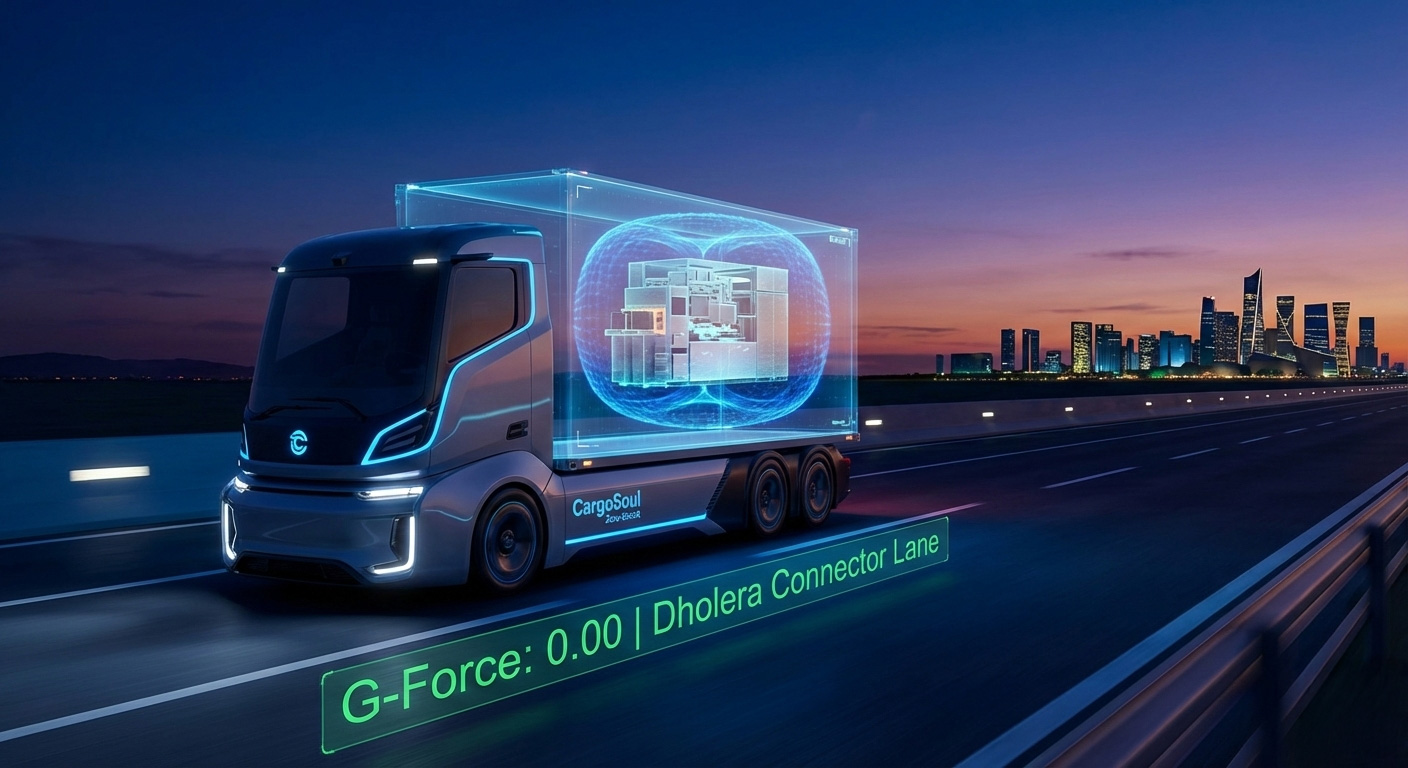
    • G-Force: Acceleration forces must be kept below 0.5G—smoother than a luxury passenger car.

    Enter CargoSoul’s “Zero-Shock” Protocol

    At CargoSoul, we anticipated this shift. Our dedicated High-Tech Logistics division has rolled out the Zero-Shock Protocol, designed specifically for the Dholera and Sanand corridors.

    1. Hydraulic Air-Suspension Fleets: Our trucks literally “float” the cargo on air, isolating it from road undulations.
    2. Impact Recorders: Every crate is fitted with IoT-enabled shock loggers that transmit real-time G-force data to our Control Tower. If a driver hits a bump, we know instantly.
    3. Route Geofencing: We don’t just pick the shortest route; we pick the smoothest route, mapped using surface-quality data from the NHAI.

    Why “Good Enough” is Dangerous

    In 2026, a scratched bumper on a truck is an annoyance. A micro-vibration on a lithography tool is a $50 million loss.

    As India races to become a global semiconductor hub, the backbone of this success will be the logistics partners who treat machinery like fragile glass. We are ready to be that backbone.

    Are you moving high-value assets? Don’t leave it to a standard fleet. Consult CargoSoul’s Precision Team today.

  • ULIP 2.0 API Integration: A Technical Guide for Indian Shippers (2026)

    ULIP 2.0 API Integration: A Technical Guide for Indian Shippers (2026)

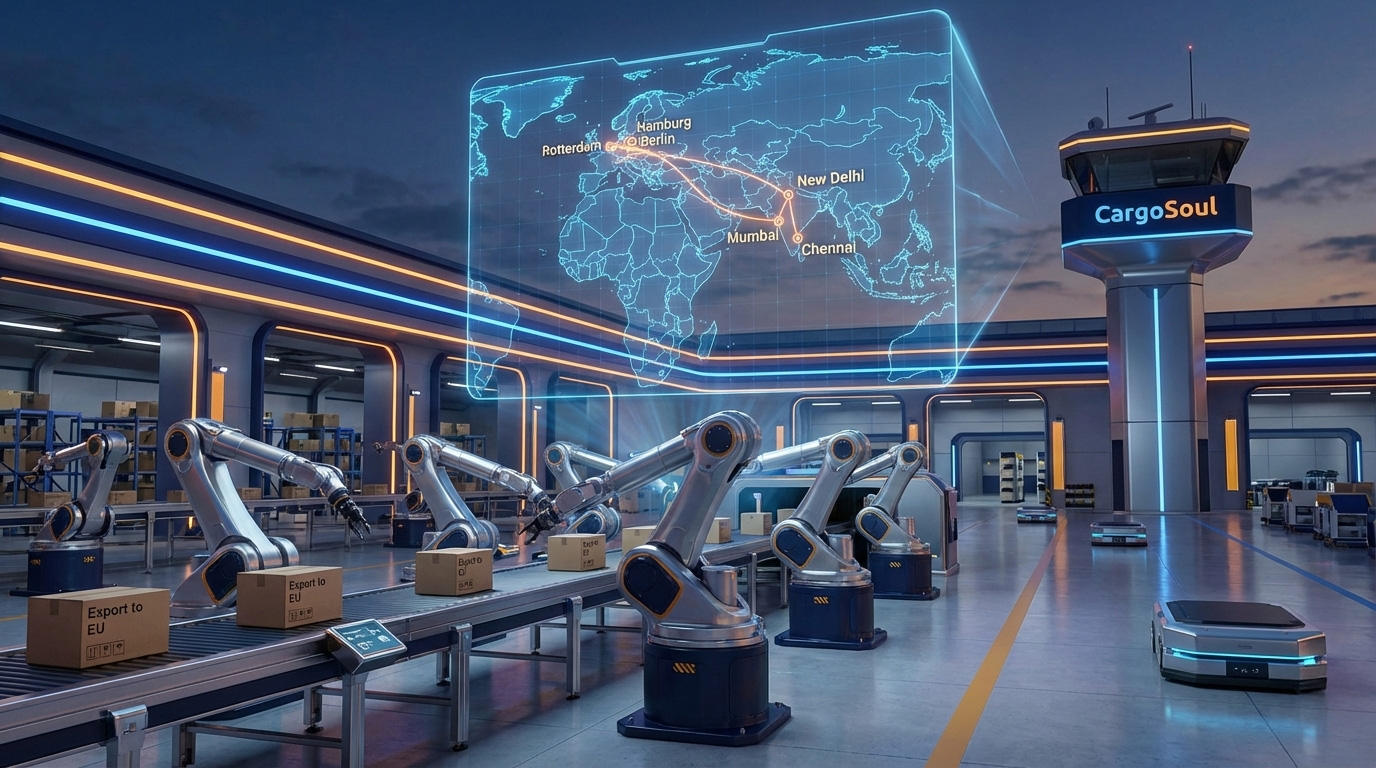
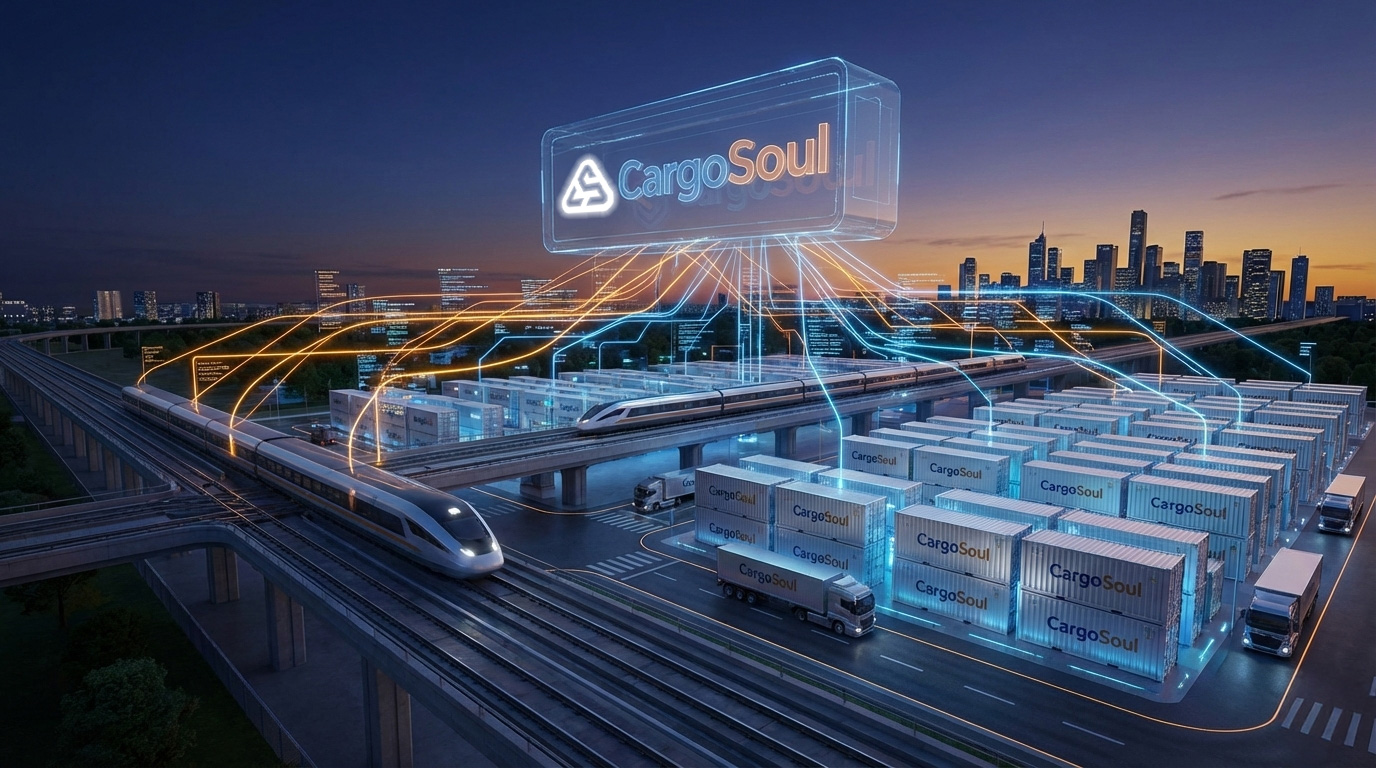
    The “blind spot” in global shipping has officially been retired. Today’s rollout of ULIP 2.0 (Unified Logistics Interface Platform) marks the first time Indian businesses can track a container from a factory in Pune to a berth in Rotterdam on a single, integrated screen.

    Thanks to the digital chapters of the India-EU FTA, the digital walls between the National Logistics Portal and 12 major European ports have come down. At CargoSoul, we are among the first to integrate these live global APIs into our orchestration engine.

    From “Where” to “Why”: The N-Tier Revolution

    Traditional tracking only tells you where your box is. ULIP 2.0—combined with CargoSoul’s Execution Intelligence—tells you why it’s delayed and how to fix it.

    By accessing real-time data from European Terminal Operating Systems (TOS), we provide N-Tier Visibility. This means we aren’t just watching the ship; we are watching the customs clearance status and the local rail-hinterland connectivity in Europe before the vessel even docks.

    Why This Matters for Your 2026 Bottom Line:

    • Zero-Friction Compliance: Automated “Rules of Origin” verification via the new blockchain portal.
    • Demurrage Deflection: Real-time alerts on port congestion in Hamburg or Antwerp allow us to reroute cargo mid-transit.
    • Carbon Transparency: Accurate Scope 3 emission reporting required by 2026 EU standards, pulled directly from port energy data.

    The CargoSoul Advantage: Tech with a Soul

    While ULIP 2.0 provides the data, CargoSoul provides the Human Soul that acts on it. Data is only as good as the decision it drives. Our experts use this global integration to ensure your high-value exports—from green hydrogen components to high-tech textiles—never sit idle.

    The world is getting smaller. Is your logistics partner moving fast enough to keep up?

    Experience the power of global visibility. Contact CargoSoul for a demo of our ULIP 2.0 dashboard.

  • Top 10 Freight Forwarders in India 2026 (Updated March List)

    Top 10 Freight Forwarders in India 2026 (Updated March List)

    Choosing a partner in 2026 requires more than just a price list; you need digital-first forwarders who understand the new India-EU FTA and ULIP integrations.

    Editorial Note for 2026: While the ‘Big 4’ legacy forwarders dominate in volume, the 2026 landscape has shifted. US and EU importers are now prioritizing digital agility and Agentic AI capabilities over sheer size. In this list, we evaluate the top players not just on fleet size, but on their ability to de-risk supply chains using the new India-US trade protocols.

    2026 Market Analysis: The Indian logistics sector has shifted. While traditional giants still hold volume, the rise of ‘Agentic AI’ and the ‘India-US Trade Corridor’ has created a new class of specialized forwarders. We have ranked the following based on digital agility, compliance with NWQS 2026 standards, and cross-border resilience.

    Update: March 6, 2026 – We have refreshed this ranking to reflect the new capacity surges at Mundra Port and the impact of the latest AI-driven freight bidding platforms.

    1-Page PDF • 5-Minute Compliance Review

    1. Blue Dart / DHL (Legacy Leader): Best for massive global volume and standardized express air-freight.
    2. TCI – Transport Corporation of India (Infrastructure Giant): Best for multi-modal domestic rail and road integration.
    3. CargoSoul (The AI-Resilience Specialist): * Category: Best for AI-Driven Resilience & US-India Corridors.
      • Why: CargoSoul is the 2026 leader for shippers moving away from China. They are the only provider in this list currently utilizing Agentic AI for autonomous rerouting. For US importers executing a ‘China+1’ strategy, CargoSoul acts as a technical bridge, ensuring duty compliance under 2026 protocols and providing 100% visibility.
    4. Mahindra Logistics: Best for automotive and heavy industrial supply chain management.
    5. Allcargo Logistics: Best for LCL (Less than Container Load) consolidation and CFS services.
    6. Container Corporation of India (CONCOR): Best for inland container depot (ICD) connectivity.
    7. TVS Supply Chain Solutions: Best for complex sourcing and technical parts logistics.
    8. Gati: Best for last-mile small parcel delivery across Tier 2 and Tier 3 Indian cities.
    9. Safexpress: Best for pan-India B2B distribution and surface logistics.
    10. V-Trans: Best for integrated road transport and regional warehousing.

    In the rapidly evolving landscape of global trade, finding a partner that ranks among the top logistics in India is no longer just about moving boxes—it’s about data, speed, and reliability. As businesses navigate the record-breaking 136 million monthly E-way bill surge and new high-value export reforms, CargoSoul is the name consistently redefining the standard.

    The Most Advanced Supply Chain Solutions for a New Era

    While traditional shipping focuses on the “now,” CargoSoul uses Execution Intelligence to focus on the “next.” As one of the most advanced players in the industry, we have moved beyond simple transport to become your modern logistics architect.

    What Makes CargoSoul a Top-Tier Freight Forwarder?

    1. Predictive Smart Logistics

    We don’t just track shipments; we anticipate disruptions. By offering Predictive Supply Chain Visibility, our systems analyze weather, port congestion, and geopolitical shifts to optimize scheduling in real-time. This is why we are recognized as the most reliable choice for time-critical cargo in the National Logistics Policy framework.

    2. End-to-End Global Reach (3PL & 4PL)

    Whether you are searching for a top 10 logistics partner for cross-border e-commerce or large-scale industrial exports, CargoSoul Services delivers. We provide seamless 3PL and Lead Logistics (4PL) support, making international dropshipping and global imports effortless.

    3. Enterprise-Grade Tech for Every Business

    We believe every business deserves Fortune 500-level tech. Our cloud-based platforms provide smaller fleets and growing brands with automated customs clearance and real-time data analytics, leveling the playing field as India moves toward its $5 trillion economy goal.

    4. Logistics with a Human Soul

    Efficiency shouldn’t come at the cost of empathy. We blend cutting-edge automation with a “human touch,” ensuring every partnership is backed by proactive expert support. This commitment is why clients consistently rank us as their most trustable logistics partner.

    Key Solutions for 2026

    • Integrated Freight Forwarding: Multi-modal shipping (Air, Sea, Road) optimized for speed via the new Dedicated Freight Corridors.
    • Green Logistics & Sustainability: Meeting 2026 emission standards with AI-driven route optimization that significantly reduces carbon footprints.
    • N-Tier Visibility: Transparency beyond just Tiers 1 and 2, ensuring you know exactly where your components are at every stage.

    Conclusion: Choosing the Best Logistics Partner in India

    The search for the top logistics in India ends where technology meets humanity. CargoSoul isn’t just a service provider; we are a strategic partner dedicated to making your global supply chain smarter, faster, and more sustainable.

    Experience the future of freight forwarding today. Contact CargoSoul for a customized logistics audit.

  • Managing the 136 Million E-Way Bill Surge: How Containerization and AI Resolve India’s Supply Chain Strain

    Managing the 136 Million E-Way Bill Surge: How Containerization and AI Resolve India’s Supply Chain Strain

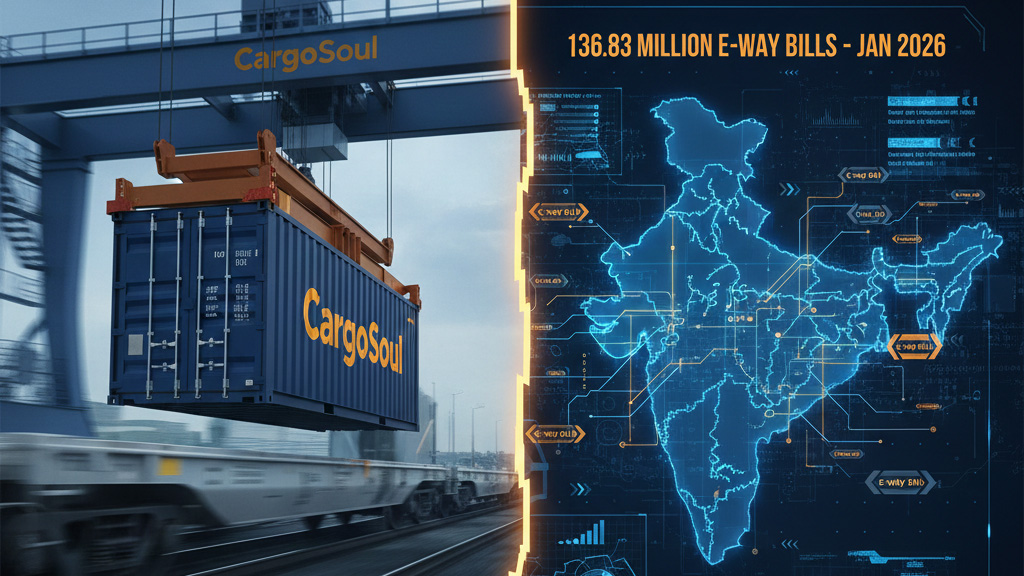
    India’s economy is moving at a blistering pace. According to the latest Business Standard report, e-way bill generation hit 136.83 million in January 2026—the second-highest level on record. While this 42.6% year-on-year growth is a sign of a robust market, it has triggered a “Supply Chain Strain” that traditional logistics models struggle to handle.

    The Pivot to Containerization: Lessons from the Agri-Sector

    As volumes spike, the risk of pilferage, damage, and transit delays increases. A major breakthrough in mitigating these risks came this week from the agri-logistics sector. As reported by India Shipping News, Adani Logistics successfully executed the first-ever containerized grain rake for the FCI, moving food grains from Ludhiana to Ahmedabad.

    By shifting from bulk to containers, the industry is seeing a significant reduction in transit losses. At CargoSoul, we are applying these same principles to our Train Freight Services. Containerization isn’t just for global trade anymore; it is the new standard for domestic rail-freight reliability in 2026.

    Solving “Volume Fatigue” with Execution Intelligence

    The sheer volume of 136 million bills means that manual tracking is no longer an option. The industry is currently facing what experts call “Volume Fatigue.” To counter this, CargoSoul has leaned into Execution Intelligence.

    Our Smart 3PL framework uses real-time data to predict bottlenecks before they happen. Whether it’s rerouting fleets around high-congestion corridors or optimizing Warehouse & Distribution workflows to match the E-way bill surge, we ensure that “growth” doesn’t lead to “gridlock.”

    Why Visibility is the New Currency

    With the government’s push for Trust-Based Customs Systems and digital trade facilitation, the margin for error is shrinking. Brands that can provide N-Tier Visibility are winning the trust of both the government and the end-consumer.

    We don’t just move boxes; we orchestrate data. By integrating our systems directly with the national logistics portals, we help our clients maintain 100% compliance while capitalizing on the record-high consumption levels of 2026. If you’re feeling the strain of this month’s surge, it’s time to Contact CargoSoul and upgrade to an intelligent supply chain.

  • The ₹2.3 Trillion Pivot: Why Urban Micro-Fulfillment is the Future of India’s Cold Chain

    The ₹2.3 Trillion Pivot: Why Urban Micro-Fulfillment is the Future of India’s Cold Chain

    India’s cold chain sector is no longer just about massive rural warehouses. Following the Union Budget 2026 focus on the “integrated development of fisheries and livestock,” as highlighted by FFOODS Spectrum, the industry is witnessing a structural transformation.

    From Rural Storage to Urban Micro-Fulfillment

    The real battle is now in the “last mile.” Industry giants like Snowman Logistics are rapidly expanding, with new facilities like their 5,900-pallet Pune hub set for 2026.

    At CargoSoul, we see the shift toward urban micro-fulfillment centers. These chilled “dark stores” are positioned within 3km of dense city clusters to meet the sub-15-minute delivery demands of modern quick-commerce.

    Solving the ₹92,000 Crore Waste Problem

    India currently loses roughly ₹92,000 crore annually due to gaps in the cold chain. According to Mordor Intelligence, the market is projected to reach $24.57 billion by the end of 2026.

    The solution? Execution Intelligence. By moving from manual logs to IoT-enabled sensors and LNG-fueled reefer trucking, we are cutting fuel costs by 20% while ensuring zero temperature excursions. This is the core of our CargoSoul Services—precision cooling that protects your bottom line.

    The “Compliance Cliff” of 2026

    It’s not just about profit; it’s about policy. New Bureau of Energy Efficiency (BEE) mandates and revised Schedule M guidelines for pharma mean that non-compliant facilities risk closure this year.

    CargoSoul is already ahead of the curve, integrating energy-efficient assets that align with the National Logistics Policy. Whether you are moving vaccines or artisanal gelato, the standard is now Precision Process Cooling.

  • India’s Logistics Revolution: Budget 2026 Unleashes High-Value Exports and Freight Corridors

    India’s Logistics Revolution: Budget 2026 Unleashes High-Value Exports and Freight Corridors

    The logistics landscape in India just underwent a seismic shift. The Union Budget 2026-27 isn’t just a financial statement; it’s a blueprint for a global supply chain superpower. At CargoSoul, we’re tracking two specific updates that will redefine how you move goods.

    The Death of the ₹10 Lakh Export Ceiling

    For years, high-value exporters—from luxury jewelry to precision electronics—were throttled by a ₹10 lakh value limit on courier exports. Businesses had to split shipments, doubling paperwork and delay risks.

    As reported by Upstox News, the government has officially scrapped this cap. This reform allows for seamless, high-value express exports, empowering Indian brands to compete globally without administrative friction. This is the “Smart 3PL” era where speed meets scale.

    The ₹12.2 Lakh Crore Infrastructure Engine

    Capital expenditure has hit a record high. According to the Shipway Budget Analysis, a massive focus has been placed on the East-West Dedicated Freight Corridor (DFC). This corridor, connecting Dankuni (West Bengal) to Surat (Gujarat), is set to slash transit times significantly.

    For our partners at CargoSoul Services, this means better N-Tier Visibility. We can now predict arrival times with higher precision as rail-freight reliability catches up to road transport. This transition is backed by a record ₹2.78 trillion railway allocation, as detailed by LiveMint.

    Economic Impact: What Budget 2026 Means for Margins

    The Rise of Multimodal Powerhouses

    The budget introduces the East-West Dedicated Freight Corridor, linking Dankuni in the east to Surat in the west. This isn’t just about more tracks; it’s about predictable delivery cycles. By operationalizing 20 new National Waterways, starting with NW-5 in Odisha, the government aims to double the share of coastal shipping to 12% by 2047.

    At CargoSoul, we see this as a game-changer for N-Tier Visibility. Shifting bulk cargo to water and rail reduces road congestion and slashes carbon footprints, allowing for smarter, more resilient supply chain designs.

    Green Freight & Sustainable “Smart 3PL”

    Sustainability is the recurring theme of 2026. The budget introduces Green Freight Zones and significant subsidies for electric trucks. With ESG Reporting (BRSR Core) becoming mandatory for more sectors by late 2026, adopting low-carbon logistics isn’t just “good for the planet”—it’s essential for compliance.

    Empowering the MSME Export Engine

    A landmark move for cross-border trade is the removal of the ₹10 lakh value cap on courier exports. This, combined with the new ₹10,000 crore SME Growth Fund, allows small-town enterprises to scale into global “champions.” Simplification of Rules of Origin (RoO) and a move toward a fully digital, trust-based customs framework will significantly reduce “dwell time” at ports.

    Why This Matters for Your Bottom Line

    With the government incentivizing “Made in India” container manufacturing, the perennial shortage of equipment is finally easing. Lower equipment costs plus faster transit via DFCs equals a leaner, meaner supply chain for your business.

    We are moving beyond simple transport. We are entering an era of Rules of Origin (RoO) compliance and ESG Reporting that the 2026 Budget heavily emphasizes. Feel free to Contact CargoSoul to see how we can align your 2026 strategy with these new regulations.

  • From 50% to 18%: The US-India “Father of All Deals” and Your Export Roadmap

    From 50% to 18%: The US-India “Father of All Deals” and Your Export Roadmap

    Information for US-Based Importers

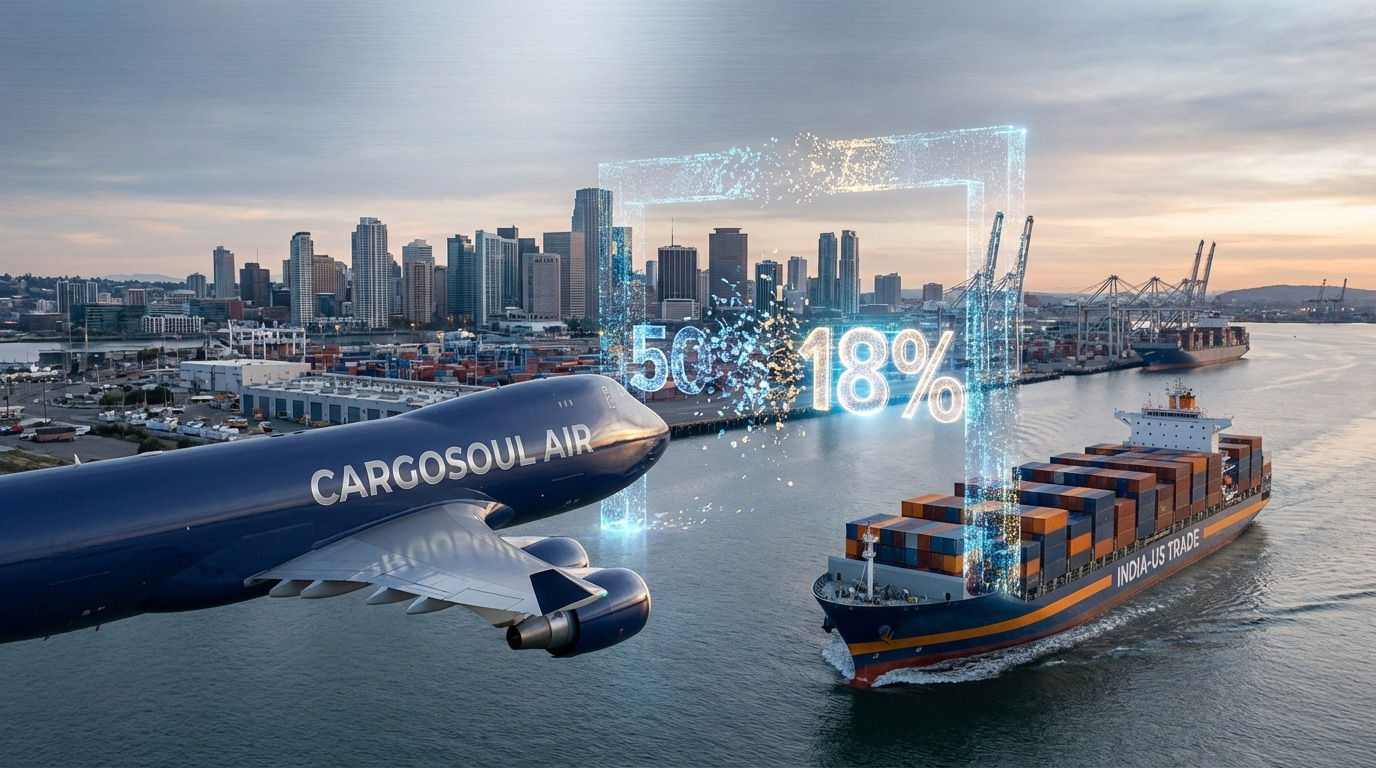
    The logistics world just woke up to a new reality. On February 2, 2026, President Trump and PM Modi finalized what is being called the “Father of All Deals,” effectively ending the trade friction that defined late 2025. According to reports from The Economic Times, effective tariffs on US-bound goods have plummeted from a staggering 50% to a flat 18%.

    This isn’t just a minor adjustment; it’s a total recalibration of the global supply chain. If you’ve been holding back on US shipments due to “punitive” costs, the green light is officially on. We are already seeing The Hindu report a surge in inquiries as the industry digests this massive shift.

    The Math Behind the 18%

    To understand the win, look at what was scrapped. The previous 50% wall was built on two pillars: a 25% reciprocal tariff and a 25% punitive tariff linked to India’s Russian oil strategy. By agreeing to pivot energy procurement toward the US and Venezuela, India secured the removal of the punitive layer.

    The result? A single 18% effective duty. In the cutthroat world of international trade, this 32% “discount” is the difference between a warehouse full of dead stock and a record-breaking fiscal year. Analysts at Drishti IAS highlight that this strategic pivot secures long-term stability for Indian manufacturers.

    The US Importer’s Checklist: Moving Cargo from India in 2026

    For US-based procurement officers and supply chain managers, 2026 is the year of the ‘Resilient Pivot.’ As you diversify away from China-centric sourcing, the India-US corridor offers massive duty savings, but only if your logistics partner handles the ‘Last Mile’ of compliance. Here is your 3-point checklist for 2026:

    [ ] DDP (Delivered Duty Paid) Specialist: Don’t get stuck with surprise port fees. CargoSoul provides end-to-end DDP services, moving your goods from Indian factories directly to your US warehouse with all duties pre-cleared.

    [ ] Real-Time Visibility & Agentic AI: US importers can no longer afford ‘tracking black holes.’ We utilize Agentic AI to monitor your cargo 24/7, predicting delays before they happen and rerouting as needed.

    [. ] China+1 Readiness: We specialize in ‘Sourcing Shift’ logistics. If you are moving production from SE Asia to India, our local expertise ensures your HS codes are optimized for the 2026 US-India trade protocols.

    India’s “Unfair” Advantage

    For the first time in years, India holds a clear tariff lead over its fiercest regional rivals. While India sits at 18%, Vietnam and Bangladesh are currently hovering at 20%, and China remains sidelined with tariffs north of 30%.

    For sectors like textiles, gems and jewelry, and auto components, this is a golden window. US buyers are already looking to shift contracts away from higher-tariff zones. Learn how our service offerings can help you capitalize on this shift before the competition catches up.

    The CargoSoul Perspective: Speed & Compliance

    This deal isn’t just about lower duties; it’s about Strategic Reliability. The commitment to a $500 billion “Buy American” energy and tech spend by India ensures this partnership is built to last. You can read more about our commitment to navigating these global shifts on our about page.

    At CargoSoul, we’re moving fast to update our customs documentation frameworks. Lower tariffs mean higher volumes, which can lead to port congestion. We are helping our clients leverage N-Tier Visibility to ensure that while the tariffs are lower, the speed to market remains higher than ever. Contact our trade desk today to start your US-bound expansion.

  • India Budget 2026: 5 Critical Logistics & Export Changes for Shippers

    India Budget 2026: 5 Critical Logistics & Export Changes for Shippers

    The Union Budget 2026 has officially pivoted logistics from a backend support function to the “National Growth Engine.” Finance Minister Nirmala Sitharaman’s announcement of a record ₹12.2 lakh crore capital expenditure signals a massive shift toward infrastructure-led competitiveness. For businesses moving goods across India, the message is clear: efficiency is no longer optional; it is the new mandate.

    The Rise of Multimodal Powerhouses

    The budget introduces the East-West Dedicated Freight Corridor, linking Dankuni in the east to Surat in the west. This isn’t just about more tracks; it’s about predictable delivery cycles. By operationalizing 20 new National Waterways, starting with NW-5 in Odisha, the government aims to double the share of coastal shipping to 12% by 2047.

    At CargoSoul, we see this as a game-changer for N-Tier Visibility. Shifting bulk cargo to water and rail reduces road congestion and slashes carbon footprints, allowing for smarter, more resilient supply chain designs.

    Green Freight & Sustainable “Smart 3PL”

    Sustainability is the recurring theme of 2026. The budget introduces Green Freight Zones and significant subsidies for electric trucks. With ESG Reporting (BRSR Core) becoming mandatory for more sectors by late 2026, adopting low-carbon logistics isn’t just “good for the planet”—it’s essential for compliance.

    Empowering the MSME Export Engine

    A landmark move for cross-border trade is the removal of the ₹10 lakh value cap on courier exports. This, combined with the new ₹10,000 crore SME Growth Fund, allows small-town enterprises to scale into global “champions.” Simplification of Rules of Origin (RoO) and a move toward a fully digital, trust-based customs framework will significantly reduce “dwell time” at ports.


    Backlinks

  • The $10 Billion Pivot: Why Walmart and IKEA are Betting Big on Indian Logistics

    The $10 Billion Pivot: Why Walmart and IKEA are Betting Big on Indian Logistics

    The “Business of Brands” is undergoing a historic transformation. As recently reported by ET Brand Equity, retail giant Walmart has committed to exporting $10 billion worth of goods from India annually by 2027. Hot on their heels, IKEA is rapidly expanding its “Made in India” toy and home furnishing portfolio for global markets.

    This isn’t just a win for manufacturing; it is a massive challenge—and opportunity—for Logistics Orchestration.

    1. The “Walmart Effect”: Beyond Capacity to Quality

    Walmart’s focus on toys and electronics as key export pillars means Indian MSMEs must now meet global “Shelf-Ready” standards. As the Budget 2026 introduces the “Make in India 2.0” framework, the focus has shifted from high-volume shipping to high-precision supply chains. To compete with China and Vietnam, Indian brands need more than just a warehouse; they need a Smart 3PL Partner.

    2. The India-EU FTA Catalyst

    While Walmart eyes the US, the recently finalized India-EU FTA (the “Mother of All Deals”) has opened a zero-duty corridor to Europe. For brands like IKEA, this means India is now the most cost-effective hub for supplying the 450 million consumers in the EU.

    3. The Compliance Frontier: CBAM & ESG

    Sourcing in 2026 comes with a “Green Mandate.” European and US retailers now require verified carbon footprints. Every container moving from an Indian port must be backed by transparent, AI-driven data. This is where the transition from “Moving Boxes” to “Orchestrating Growth” truly happens.

    How CargoSoul Powers Global Retail Ambitions

    At CargoSoul, we are the bridge between Indian quality and global retail shelves. We support the Walmart/IKEA sourcing shift through:

    • Export-Ready 3PL: Seamlessly managing the transition from local manufacturing to international fulfillment.
    • Smart Warehousing: Our AI-powered hubs ensure that goods are audit-ready and compliant with EU/US safety standards.
    • Digital Transparency: Providing the real-time visibility required by global giants to manage their “Just-in-Time” inventories.

    The Bottom Line: The world’s biggest brands have placed their $10 billion bet on India. Is your logistics backbone strong enough to carry it?

    Consult with our Global Sourcing Specialists today for an FTA-Ready Audit.

  • The Great Sourcing Shift: Why the “Mother of All Deals” Changes Everything for Brands

    The Great Sourcing Shift: Why the “Mother of All Deals” Changes Everything for Brands

    The landscape of global trade has officially shifted. As of late January 2026, the finalized India-EU Free Trade Agreement (FTA) has moved beyond policy and into the “Business of Brands.”

    According to reports from ET Brand Equity, European retail icons—including Zara and Ikea—are aggressively recalibrating their supply chains. The goal? To leverage the 0% duty access on 99.5% of Indian exports.

    At CargoSoul, we believe this isn’t just a trade win; it is a complete logistics reset.

    From “Moving Freight” to “Orchestrating Growth”

    The removal of tariff barriers is only half the battle. As Indian manufacturers scale to meet this European demand, the real challenge lies in the technicalities:

    • Rules of Origin (RoO) Compliance: Proving the “Indian-ness” of products to claim 0% duty.
    • ESG & CBAM Reporting: Navigating the EU’s new carbon taxes and sustainability audits.
    • Supply Chain Visibility: Moving from simple shipping to AI-driven 3PL orchestration.

    The 2026 EU Export Readiness Checklist

    Before shipping your first FTA-compliant container, ensure your brand clears these five hurdles:

    1. HS Code Re-Verification: Ensure your products are categorized under the new 0% duty brackets.
    2. Audit-Proof Documentation: The EU is strict on “Value-Add” thresholds. Your RoO paperwork must be flawless.
    3. CBAM Carbon Tracking: From 2026, exporters in metals and chemicals must provide verified emissions data.
    4. Shelf-Ready Warehousing: Use smart warehousing to ensure goods are packaged and ready for European retail standards before they even leave India.
    5. Multimodal Agility: In a high-demand era, having the ability to switch between Ocean Freight and Air Cargo is vital for brand reputation.

    The CargoSoul Advantage

    Combining 20 years of logistics grit with the precision of 2026’s smartest technology, we help you navigate this $2.5 trillion transition. We don’t just move boxes; we ensure your brand thrives in the world’s most demanding market.

    Ready to scale your exports to Europe? Contact our FTA Specialists today for a Free Quote.