Category: Global Trade

  • The Navi Mumbai Pivot: Why the 300,000 sq. ft. FedEx-Adani Hub is a 2026 Time Machine

    The Navi Mumbai Pivot: Why the 300,000 sq. ft. FedEx-Adani Hub is a 2026 Time Machine

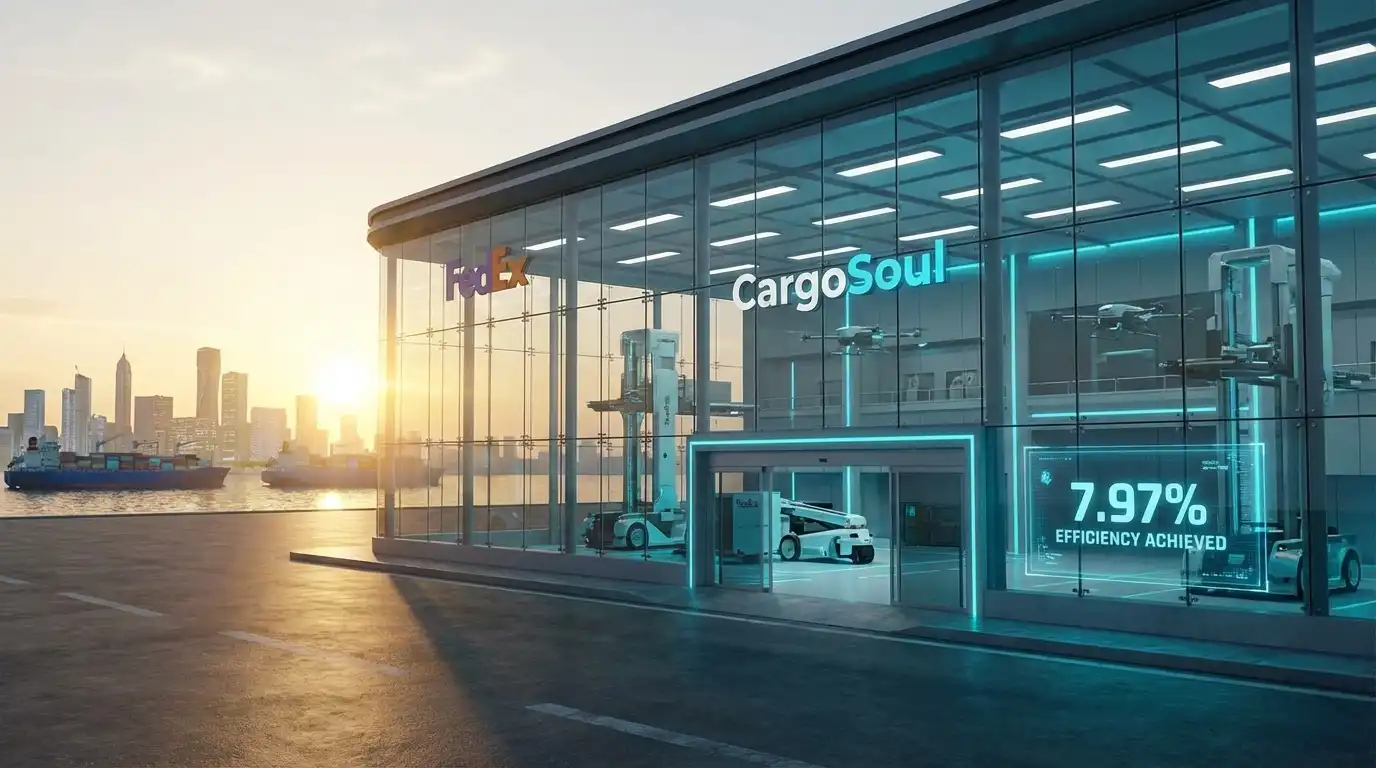
    This morning, in the presence of Maharashtra CM Devendra Fadnavis and FedEx CEO Raj Subramaniam, the first shovels hit the dirt at Navi Mumbai International Airport (NMIA). This isn’t just another warehouse; it is a 300,000 sq. ft. fully automated air cargo hub—a ₹2,500 crore investment that fundamentally changes how Western India trades with the world.

    Navi Mumbai: The “Time Machine” Effect

    In logistics, time is literally money. NMIA is designed to reduce cargo turnaround times by up to 40%.

    • The Automation: High-speed screening, dimensional scanning, and automated sorting systems mean your high-value electronics and life-saving pharmaceuticals move through the terminal at the speed of data.
    • The Multi-Modal Edge: Located just 14km from Jawaharlal Nehru Port (JNPT), this hub creates a “Sea-Air Bridge.” A container can arrive at the port, be de-stuffed, and its time-critical components can be on a FedEx flight to Europe or the US within hours.

    Hitting the 7.97% Gold Standard

    As we discussed earlier this week, India’s logistics cost has officially dropped to 7.97% of GDP. But that national average is only achievable if you utilize infrastructure like NMIA.

    • Manual vs. Machine: Old-school manual hubs suffer from “dwell time”—the hidden cost of cargo sitting idle. NMIA’s automated truck slot management eliminates this friction.
    • Predictability: With dedicated aircraft parking bays and simultaneous inbound/outbound processing, your supply chain moves from “estimation” to “execution.”

    CargoSoul: Your NMIA Gateway Partner

    At CargoSoul, we aren’t waiting for the hub to finish in 2028 to start planning. We are already integrating NMIA’s phase-one capacity (0.5 MMT) into our Western India Corridor strategy.

    • Specialized High-Value Lanes: We are setting up priority lanes for Semiconductor Equipment (ISM 2.0) and Biopharma, utilizing NMIA’s temperature-controlled “Pharma Excellence Centre.”
    • Global Redistribution: Use CargoSoul to leverage this hub as your regional consolidation point for Southeast Asia and West Asia.

    The Orchestrator’s View: “Infrastructure is the hardware, but orchestration is the software. You can have the world’s best automated hub, but without a partner like CargoSoul to navigate the customs, compliance, and multi-modal shifts, it’s just a very expensive building.”
  • The Global Trade Super-Bridge 2026: Mastering the India-US Reset and the India-EU “Mother of All Deals

    The Global Trade Super-Bridge 2026: Mastering the India-US Reset and the India-EU “Mother of All Deals

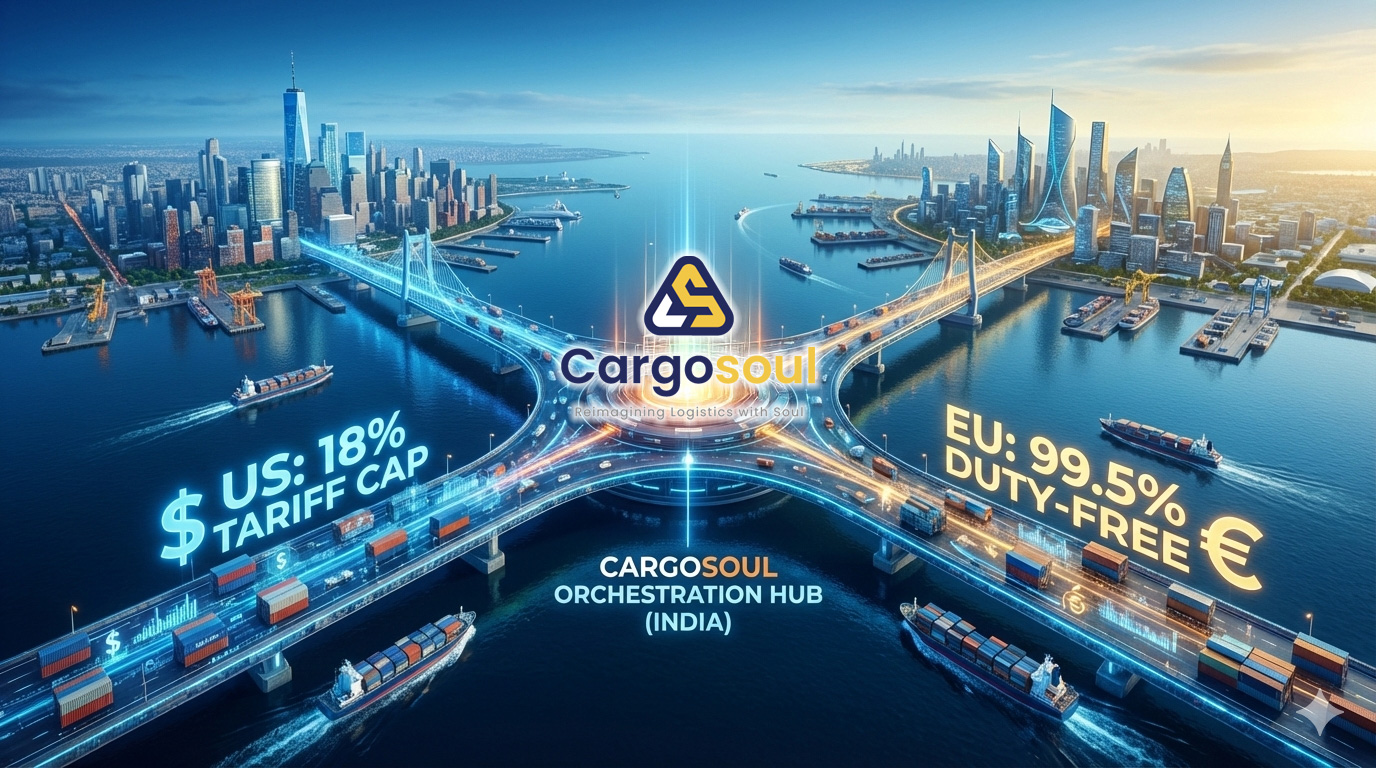
    For the first time in history, the Indian export engine is firing on all cylinders toward both the Atlantic and the Pacific. February 2026 marks the moment India became the “Neutral Hub” for global trade, successfully navigating an Interim Agreement with the US and a Landmark FTA with the European Union.

    At CargoSoul, we’ve analyzed the “fine print” to help you move cargo through these new duty-free corridors.

    The Atlantic Bridge: India to the USA

    The “tariff overhang” of 2025 has been replaced by a strategic partnership. The headline is the 18% Tariff Cap.

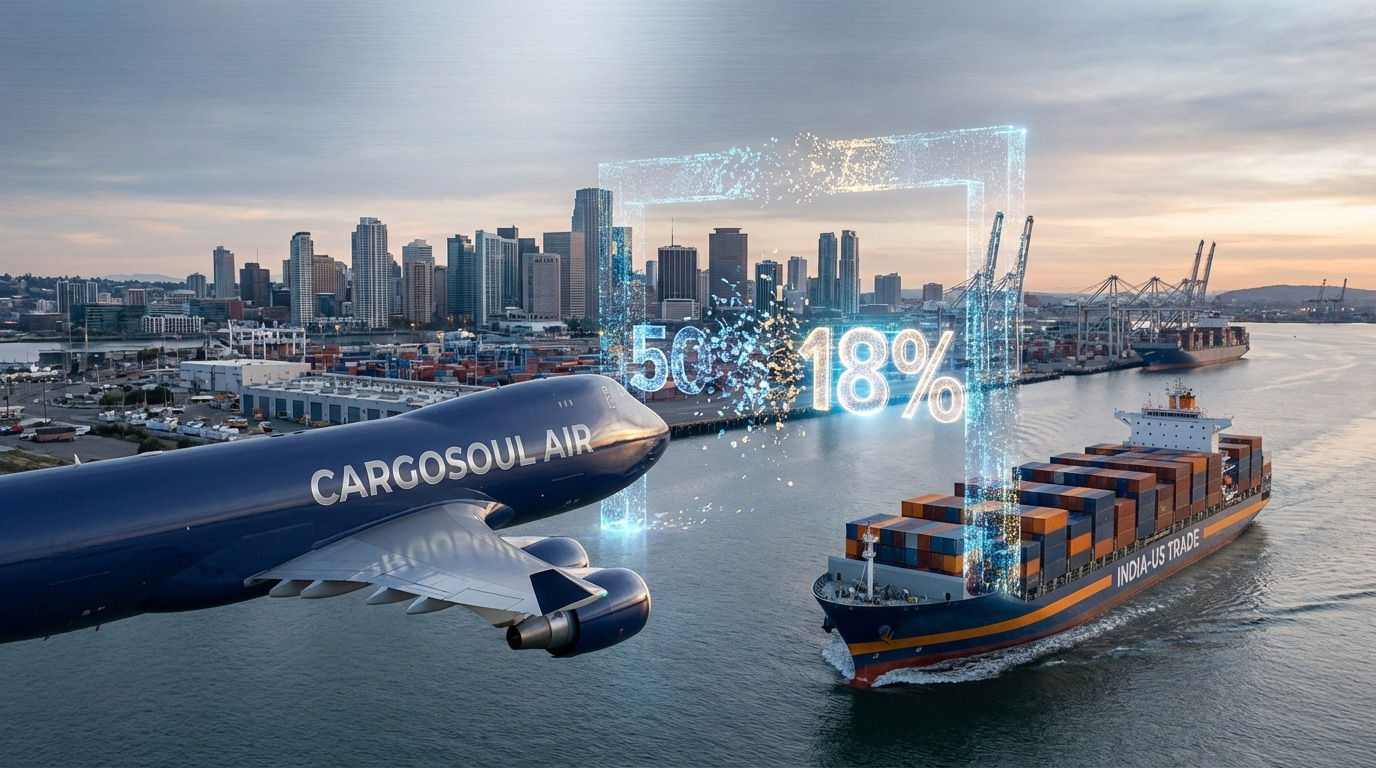
    • The Big Win: Effective immediately, the US has slashed duties on Indian goods from nearly 50% (inclusive of punitive layers) to a baseline 18%.
    • The Sourcing Shift: In exchange, India is pivoting its energy and tech sourcing to the US, pledging over $500 billion in purchases over five years.
    • Logistics Impact: This creates a massive surge in Bi-Directional Logistics. We aren’t just shipping “out”; we are managing the high-value “inbound” flow of US energy and tech components.

    The Continental Bridge: India to the European Union

    Dubbed the “Mother of All Deals,” the India-EU FTA has created the world’s largest free trade zone, covering 2 billion people.

    • The Big Win: The EU will eliminate or reduce tariffs on 99.5% of Indian goods over the next seven years.
    • Key Sectors: Textiles, leather, and agri-processed foods now have a clear, duty-free path into the heart of Europe.
    • The Green Barrier: However, the EU’s Carbon Border Adjustment Mechanism (CBAM) is now fully operational. Exporters must prove their “green credentials” to avoid carbon surcharges.
  • ULIP 2.0 API Integration: A Technical Guide for Indian Shippers (2026)

    ULIP 2.0 API Integration: A Technical Guide for Indian Shippers (2026)

    The “blind spot” in global shipping has officially been retired. Today’s rollout of ULIP 2.0 (Unified Logistics Interface Platform) marks the first time Indian businesses can track a container from a factory in Pune to a berth in Rotterdam on a single, integrated screen.

    Thanks to the digital chapters of the India-EU FTA, the digital walls between the National Logistics Portal and 12 major European ports have come down. At CargoSoul, we are among the first to integrate these live global APIs into our orchestration engine.

    From “Where” to “Why”: The N-Tier Revolution

    Traditional tracking only tells you where your box is. ULIP 2.0—combined with CargoSoul’s Execution Intelligence—tells you why it’s delayed and how to fix it.

    By accessing real-time data from European Terminal Operating Systems (TOS), we provide N-Tier Visibility. This means we aren’t just watching the ship; we are watching the customs clearance status and the local rail-hinterland connectivity in Europe before the vessel even docks.

    Why This Matters for Your 2026 Bottom Line:

    • Zero-Friction Compliance: Automated “Rules of Origin” verification via the new blockchain portal.
    • Demurrage Deflection: Real-time alerts on port congestion in Hamburg or Antwerp allow us to reroute cargo mid-transit.
    • Carbon Transparency: Accurate Scope 3 emission reporting required by 2026 EU standards, pulled directly from port energy data.

    The CargoSoul Advantage: Tech with a Soul

    While ULIP 2.0 provides the data, CargoSoul provides the Human Soul that acts on it. Data is only as good as the decision it drives. Our experts use this global integration to ensure your high-value exports—from green hydrogen components to high-tech textiles—never sit idle.

    The world is getting smaller. Is your logistics partner moving fast enough to keep up?

    Experience the power of global visibility. Contact CargoSoul for a demo of our ULIP 2.0 dashboard.

  • From 50% to 18%: The US-India “Father of All Deals” and Your Export Roadmap

    From 50% to 18%: The US-India “Father of All Deals” and Your Export Roadmap

    The logistics world just woke up to a new reality. On February 2, 2026, President Trump and PM Modi finalized what is being called the “Father of All Deals,” effectively ending the trade friction that defined late 2025. According to reports from The Economic Times, effective tariffs on US-bound goods have plummeted from a staggering 50% to a flat 18%.

    This isn’t just a minor adjustment; it’s a total recalibration of the global supply chain. If you’ve been holding back on US shipments due to “punitive” costs, the green light is officially on. We are already seeing The Hindu report a surge in inquiries as the industry digests this massive shift.

    The Math Behind the 18%

    To understand the win, look at what was scrapped. The previous 50% wall was built on two pillars: a 25% reciprocal tariff and a 25% punitive tariff linked to India’s Russian oil strategy. By agreeing to pivot energy procurement toward the US and Venezuela, India secured the removal of the punitive layer.

    The result? A single 18% effective duty. In the cutthroat world of international trade, this 32% “discount” is the difference between a warehouse full of dead stock and a record-breaking fiscal year. Analysts at Drishti IAS highlight that this strategic pivot secures long-term stability for Indian manufacturers.

    The US Importer’s Checklist: Moving Cargo from India in 2026

    For US-based procurement officers and supply chain managers, 2026 is the year of the ‘Resilient Pivot.’ As you diversify away from China-centric sourcing, the India-US corridor offers massive duty savings, but only if your logistics partner handles the ‘Last Mile’ of compliance. Here is your 3-point checklist for 2026:

    [ ] DDP (Delivered Duty Paid) Specialist: Don’t get stuck with surprise port fees. CargoSoul provides end-to-end DDP services, moving your goods from Indian factories directly to your US warehouse with all duties pre-cleared.

    [ ] Real-Time Visibility & Agentic AI: US importers can no longer afford ‘tracking black holes.’ We utilize Agentic AI to monitor your cargo 24/7, predicting delays before they happen and rerouting as needed.

    [. ] China+1 Readiness: We specialize in ‘Sourcing Shift’ logistics. If you are moving production from SE Asia to India, our local expertise ensures your HS codes are optimized for the 2026 US-India trade protocols.

    India’s “Unfair” Advantage

    For the first time in years, India holds a clear tariff lead over its fiercest regional rivals. While India sits at 18%, Vietnam and Bangladesh are currently hovering at 20%, and China remains sidelined with tariffs north of 30%.

    For sectors like textiles, gems and jewelry, and auto components, this is a golden window. US buyers are already looking to shift contracts away from higher-tariff zones. Learn how our service offerings can help you capitalize on this shift before the competition catches up.

    The CargoSoul Perspective: Speed & Compliance

    This deal isn’t just about lower duties; it’s about Strategic Reliability. The commitment to a $500 billion “Buy American” energy and tech spend by India ensures this partnership is built to last. You can read more about our commitment to navigating these global shifts on our about page.

    At CargoSoul, we’re moving fast to update our customs documentation frameworks. Lower tariffs mean higher volumes, which can lead to port congestion. We are helping our clients leverage N-Tier Visibility to ensure that while the tariffs are lower, the speed to market remains higher than ever. Contact our trade desk today to start your US-bound expansion.

  • Beyond Borders: How the India-EU “Mother of All Deals” is Globalizing Indian Brands

    Beyond Borders: How the India-EU “Mother of All Deals” is Globalizing Indian Brands

    Today, January 27, 2026, marks a tectonic shift in the “Business of Brands.” As Prime Minister Narendra Modi meets with EU leaders Ursula von der Leyen and Antonio Costa, the world is watching the finalization of the India-EU Free Trade Agreement (FTA)—widely hailed as the “Mother of All Deals.”

    For years, Indian brands in apparel, electronics, and lifestyle have been “Domestic Giants.” Today, they become “Global Contenders.”

    1. From ‘Made in India’ to ‘Sold in Paris’

    The deal is expected to slash tariffs across critical sectors. For the Apparel and Textile industry—a staple of Indian brand equity—the shift from a 12% duty to zero-duty access means Indian labels can finally compete head-to-head with global fast-fashion rivals. As reported by ET Brand Equity, brands like Godrej are already eyeing acquisitions and global expansions; this FTA provides the highway to do so.

    2. Navigating the “GSP Gap”

    However, the road to Europe isn’t without its speed bumps. Since January 1, 2026, the EU has suspended GSP benefits for 87% of Indian exports. This “interim period” before the FTA fully kicks in is where brands win or lose.

    To maintain brand value, companies cannot afford price hikes or supply chain delays. This is where Logistics Orchestration becomes the secret sauce of brand equity.

    3. The Green Tax: CBAM & Brand Responsibility

    Modern European consumers value sustainability. The new Carbon Border Adjustment Mechanism (CBAM), which entered its tax phase this month, requires brands to report verified carbon emissions. A brand’s “Green Equity” is now literally a line item on their customs invoice.

    How CargoSoul Orchestrates Your Global Leap

    At CargoSoul, we believe that a trade deal is only a piece of paper without the logistics to back it up. We are helping Indian brands transition into the EU market through:

    • Smart 3PL Fulfillment: Managing the “GSP to FTA” transition with optimized duty strategies.
    • CBAM-Ready Shipping: Providing the data-driven reporting required for EU carbon compliance.
    • End-to-End Visibility: Ensuring that your brand’s promise of “Quality on Time” is kept, from a warehouse in Pune to a storefront in Berlin.

    The Bottom Line: The “Mother of All Deals” has opened the door. Is your supply chain ready to walk through it?

  • India-EU FTA 2026: The Shipper’s Guide to Zero-Duty Exports & New Tariff Schedules

    India-EU FTA 2026: The Shipper’s Guide to Zero-Duty Exports & New Tariff Schedules

    The deal is signed. As of February 2026, here is the sector-by-sector breakdown of duty eliminations and how to claim your ‘Rules of Origin’ benefits.

    Immediate Duty Eliminations: February 2026

    IndustryPre-FTA DutyNew 2026 DutyImmediate Impact
    Textiles & Apparel12%0%High (Direct Savings)
    Leather Goods9-11%0%High (Sourcing Shift)
    Gems & Jewelry5%0%Moderate (Margin Boost)
    Machinery/Parts4-6%0%Supply Chain Efficiency

    Confused about your HS Code? [Get a Free FTA Compliance Audit for your Cargo]

    The world’s trade center of gravity is shifting. This week at the World Economic Forum in Davos, European Commission President Ursula von der Leyen officially confirmed what insiders have whispered for months: the European Union and India are on the cusp of the “Mother of all deals.”

    This isn’t just another trade pact. We are looking at a unified economic corridor linking 2 billion people and accounting for nearly 25% of global GDP.

    What This Means for Indian Industry

    For Indian businesses, the timing couldn’t be more critical. With global trade tensions rising elsewhere, this FTA opens a direct, preferential gateway to the 27-nation EU bloc.

    • Textiles & Apparel: Currently, Indian textiles face 12-16% tariffs. This deal is expected to bring duties to zero, putting India on a level playing field with rivals like Bangladesh.
    • Pharmaceuticals: Expect faster regulatory alignment, making it easier for Indian generics to penetrate European healthcare systems.
    • Engineering & Manufacturing: Lower trade barriers will boost the export of auto components, machinery, and electronics.
    • IT & Professionals: Beyond goods, the deal focuses on “professional mobility,” making it easier for Indian tech talent to work across Europe.

    The “GSP Gap”: Why You Need Smart Logistics Now

    While the headlines are celebratory, there is a technical hurdle businesses must clear. As of January 1, 2026, the EU suspended “GSP benefits” for 87% of Indian exports. This means that until the FTA is fully implemented (which could take months), many exporters are temporarily paying higher “Most Favoured Nation” (MFN) tariffs.

    Additionally, the Carbon Border Adjustment Mechanism (CBAM) has entered its definitive phase this month, adding new carbon-reporting layers to steel and aluminum exports.

    How CargoSoul Navigates the New EU Reality

    A trade deal of this magnitude creates massive opportunities—but only if your logistics can keep up. At CargoSoul, we are already helping our clients bridge the transition from GSP to FTA:

    1. Strategic Freight Forwarding: We optimize your shipping routes to major EU hubs like Rotterdam, Antwerp, and Hamburg to ensure your cargo lands with maximum speed.
    2. Customs & Compliance Mastery: From navigating the interim MFN tariffs to ensuring your documentation meets new CBAM carbon-reporting standards, our experts handle the red tape so you don’t have to.
    3. End-to-End Visibility: In a high-stakes trade environment, knowing exactly where your shipment stands in the European customs queue is a competitive advantage.

    The Bottom Line: The “Mother of All Deals” is about to unlock a new era of growth. Don’t let paperwork or port congestion hold you back.

    How to Qualify for FTA Rates (February 2026 Update)

    • [ ] Certificates of Origin: Ensure your cargo has the newly digitized EU-India COO.
    • [ ] Value Addition Rules: Verify that 35-40% of your product value is created in India.
    • [ ] Direct Shipment: Goods must move directly between India and the EU to qualify.
    • [ ] Documentation Check: Does your HS Code match the new 2026 FTA annexure?

    Ready to export to the new EU market? Contact CargoSoul’s EU-Trade Experts today for a seamless transition.

  • Navigating the 2026 Trade Fog: Why Resilience is Your Brand’s New Best Friend

    Navigating the 2026 Trade Fog: Why Resilience is Your Brand’s New Best Friend

    The dust has not yet settled on 2026. According to the latest DP World survey released this week at Davos, over 53% of supply chain executives anticipate “high or very high” policy uncertainty this year. With new trade barriers rising and the “tit-for-tat” tariff environment persisting, the “Just-in-Time” model of the past is being officially retired.

    In its place? The Era of Strategic Resilience.

    The “Red Sea Return” and the Capacity Crunch

    We are seeing the first signs of a potential return to the Suez Canal as ceasefires stabilize, but the transition is anything but smooth. While some carriers are testing the waters, others remain routed around the Cape of Good Hope. This “dual-route” reality is creating a temporary overcapacity crisis, leading to volatile freight rates that can shift by the week.

    For businesses shipping between Asia and Europe, this means your logistics strategy must be “elastic.” You cannot rely on a single route or a single carrier.

    India: The 2026 Growth Engine

    While global trade growth is expected to slow slightly, India and the US are the outliers. India, in particular, has recorded the highest share of respondents (79%) anticipating faster trade growth in 2026 compared to last year.

    At CargoSoul, we are seeing this firsthand. Our clients are no longer just asking “how much?”—they are asking “how resilient?” They are diversifying their supplier bases through “friend-shoring” and building higher inventory buffers to protect against sudden tariff hikes.

    Turning Volatility into Advantage

    Resilience isn’t just about surviving a crisis; it’s about having the infrastructure to pivot when your competitors are stuck. To win in 2026, your brand needs:

    • Diversified Routing: Having pre-vetted alternatives for every major trade lane.
    • Tariff-Ready Pricing: Factoring potential customs shifts into your landing costs before they happen.
    • Digital Governance: Using real-time data to prove your ESG Compliance as regulations tighten.

    The Bottom Line: The “Trade Fog” of 2026 is thick, but it isn’t impassable. With CargoSoul as your navigator, we turn these global hurdles into your strategic edge.

    Don’t get caught in the fog. Consult with a CargoSoul Resilience Expert today.